Amethyst Cluster · 280g
Free shipping over ₹5,000 (≤500g) · or buy via WhatsApp →
About this Amethyst Cluster · 280g
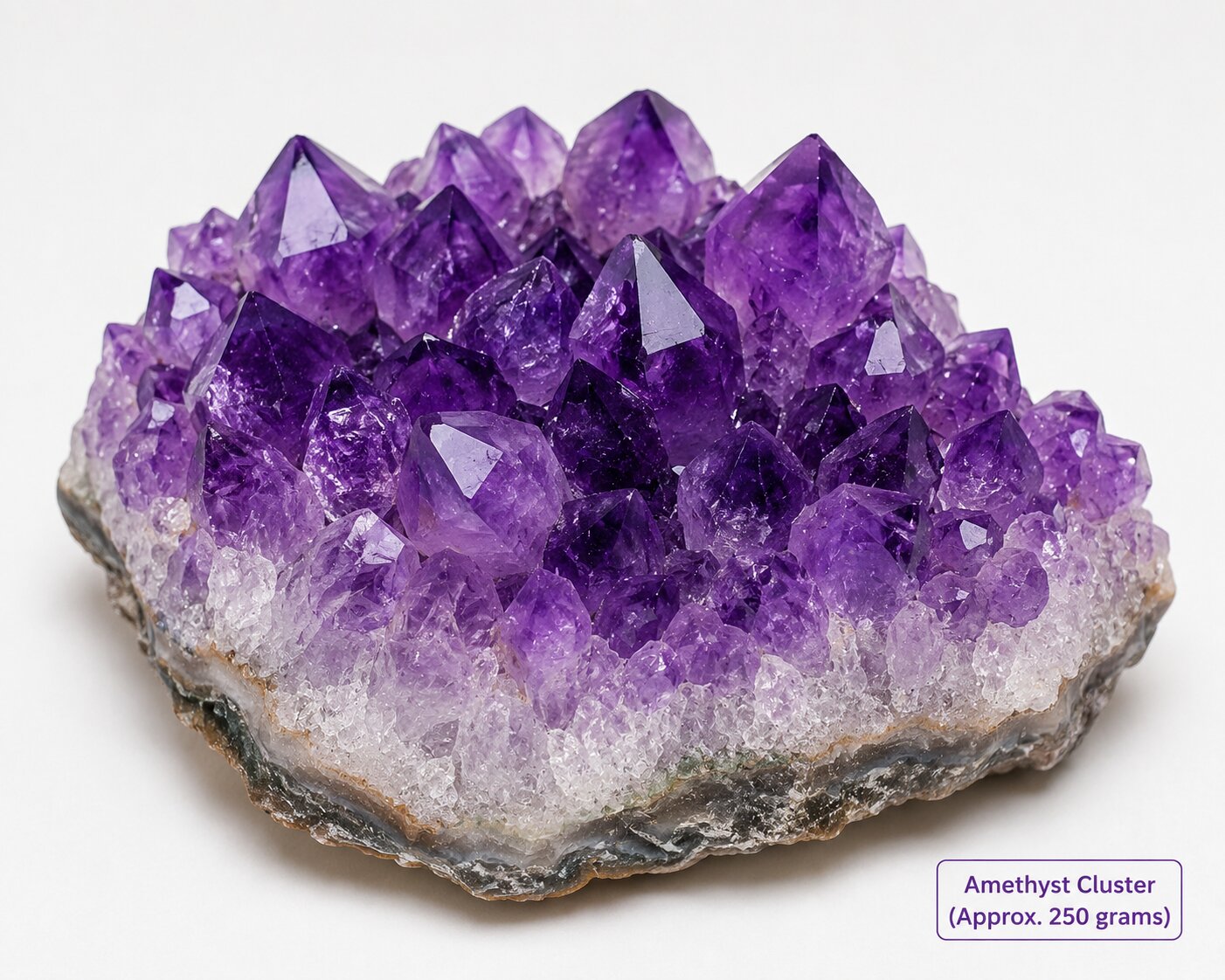
A raw amethyst cluster weighing 280 grams, described by the supplier as Brazilian. Amethyst is the purple variety of quartz, and a cluster is a natural group of crystals that grew side by side from a shared base. Because this piece is raw rather than cut or polished, each point keeps the faces and tips it grew with, and the colour, size and arrangement of the points are particular to this cluster; no two are the same.
In Indian gem lists amethyst is known as Jamunia or Katela, and it is widely described as an upratna, a substitute stone, for blue sapphire, which is why this cluster is listed under Saturn. Clusters are not worn. They are traditionally placed in the home - on a desk, in a shrine, on a bookshelf or beside a meditation seat - and many people keep one simply for its colour and form. Vastu and modern crystal practices suggest particular corners of the house; those are customs, and we describe them as customs rather than as effects.
What you receive is the single cluster described here. Raw clusters have sharp points and a rough base, so stand it on a cloth or felt pad to save furniture from scratches, keep it out of reach of small children, and lift it by the base rather than by the points, which can snap. The listing records the weight but not the dimensions; write to us if you need measurements for a shelf or display case.
Wearing amethyst as a Saturn substitute is a question for an astrologer who has seen your chart. A cluster kept in a room is generally treated as decorative and devotional rather than as a remedy.
Astrological significance
In Jyotish, Saturn (Shani) is the karaka of discipline, longevity and karma, and its primary gem is blue sapphire. Amethyst is commonly offered as Saturn's upratna, or substitute, for people who do not use Neelam, though not every astrologer accepts substitute stones. A raw cluster is not worn, so it is usually treated as a decorative or devotional piece rather than a remedy; if you are thinking of wearing amethyst for Saturn, ask an astrologer first.
Care & first wear
Dust with a soft dry brush. Amethyst can fade with long exposure to strong sunlight, so display it away from a sunny window. If it needs washing, use lukewarm water only, avoid hot water and sudden temperature changes, and let it air-dry fully before putting it back. Do not use chemical cleaners.